Built and tested
Working prototypes
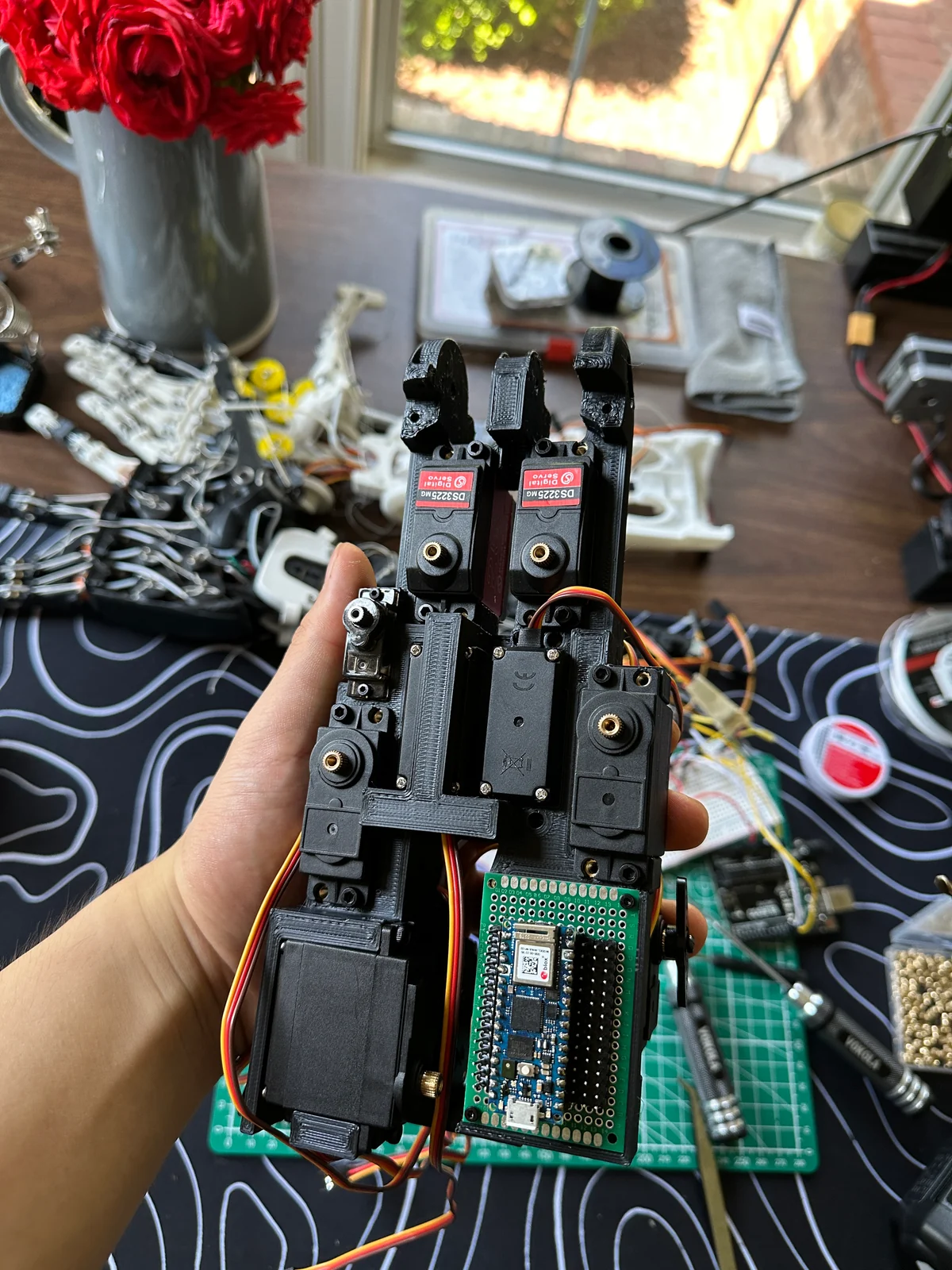
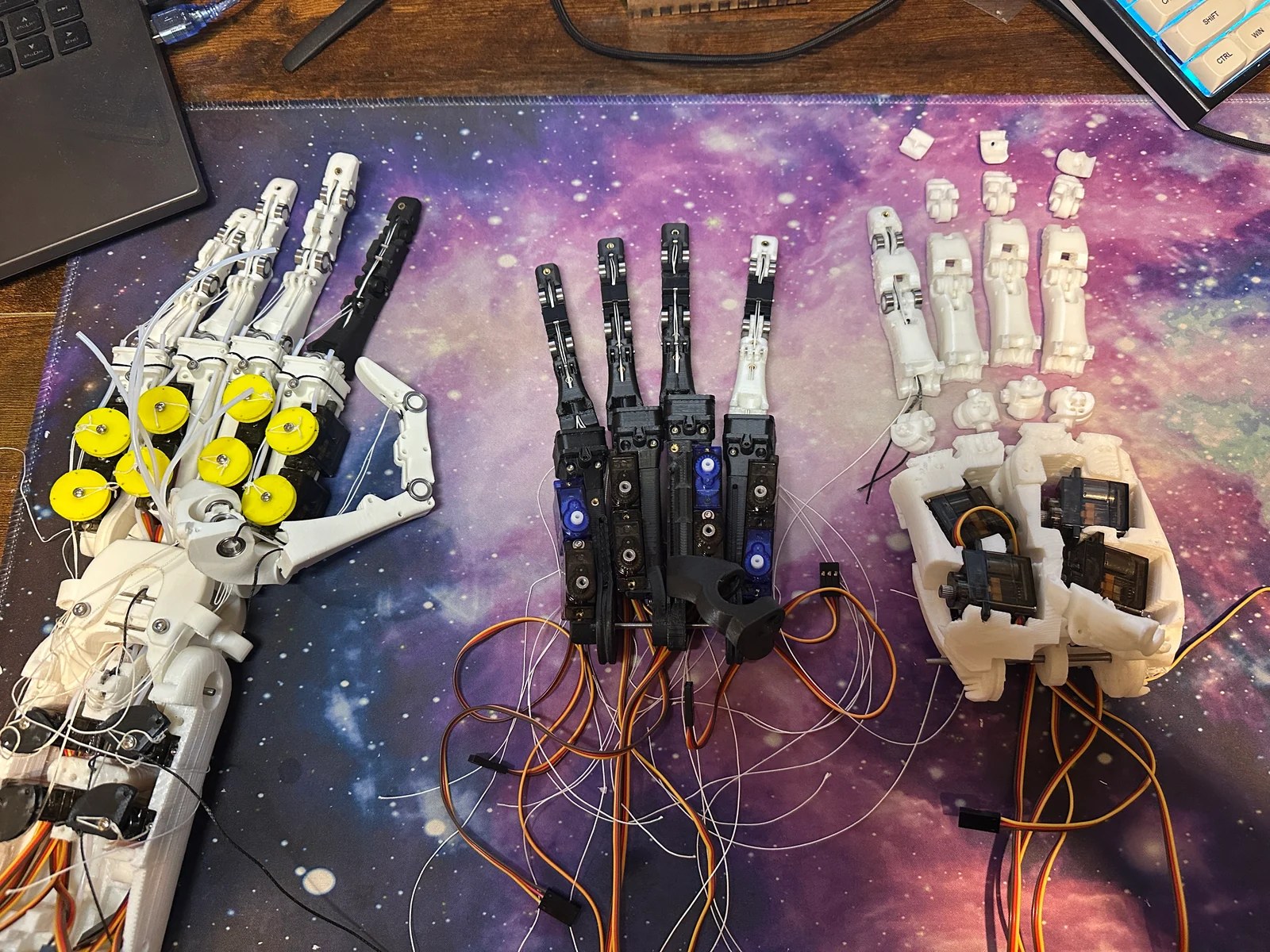
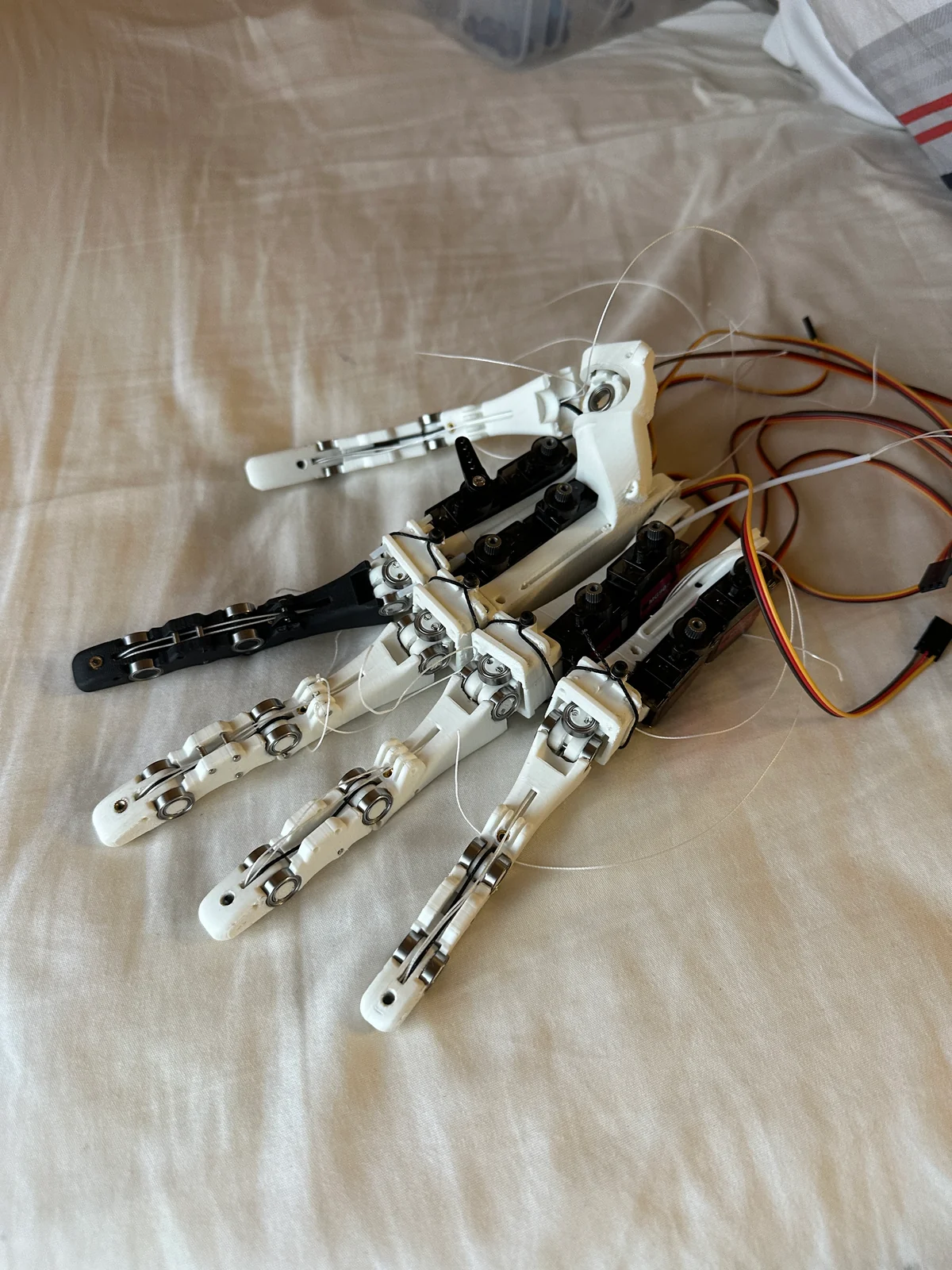
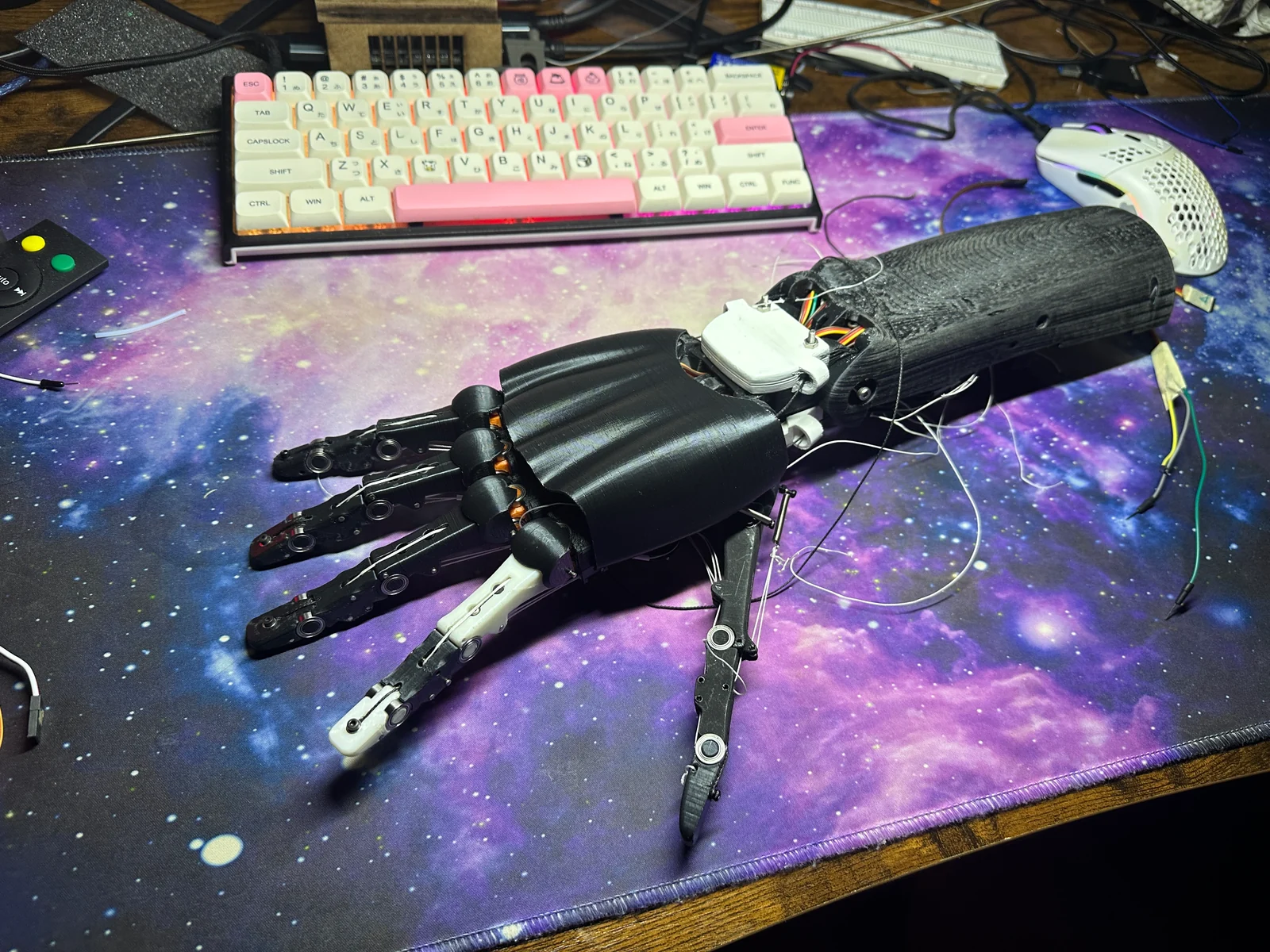
I built and tested functional hand prototypes.
For hand control, I used OpenCV and a webcam to estimate joint angles and convert them into PWM commands for the servos.
Mechanical design · UW–Madison
I'm Hao Chen, mechanical lead for the hand subsystem at UW Humanoid. I design tendon-driven robotic hands, build walking robots, and develop engineering tools.
Explore the hand projectMy hexapod walking through UW–Madison's mechanical engineering building.
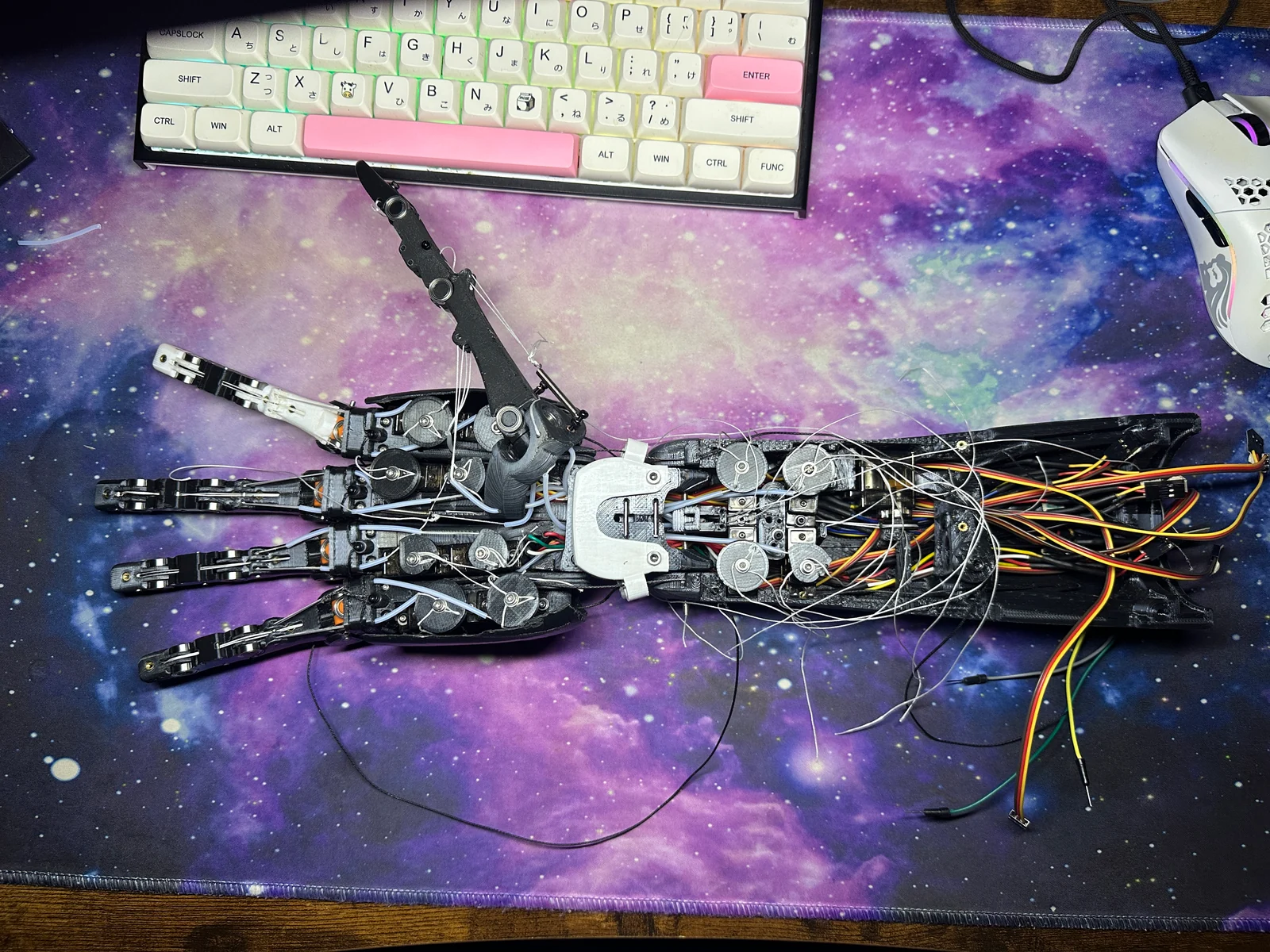
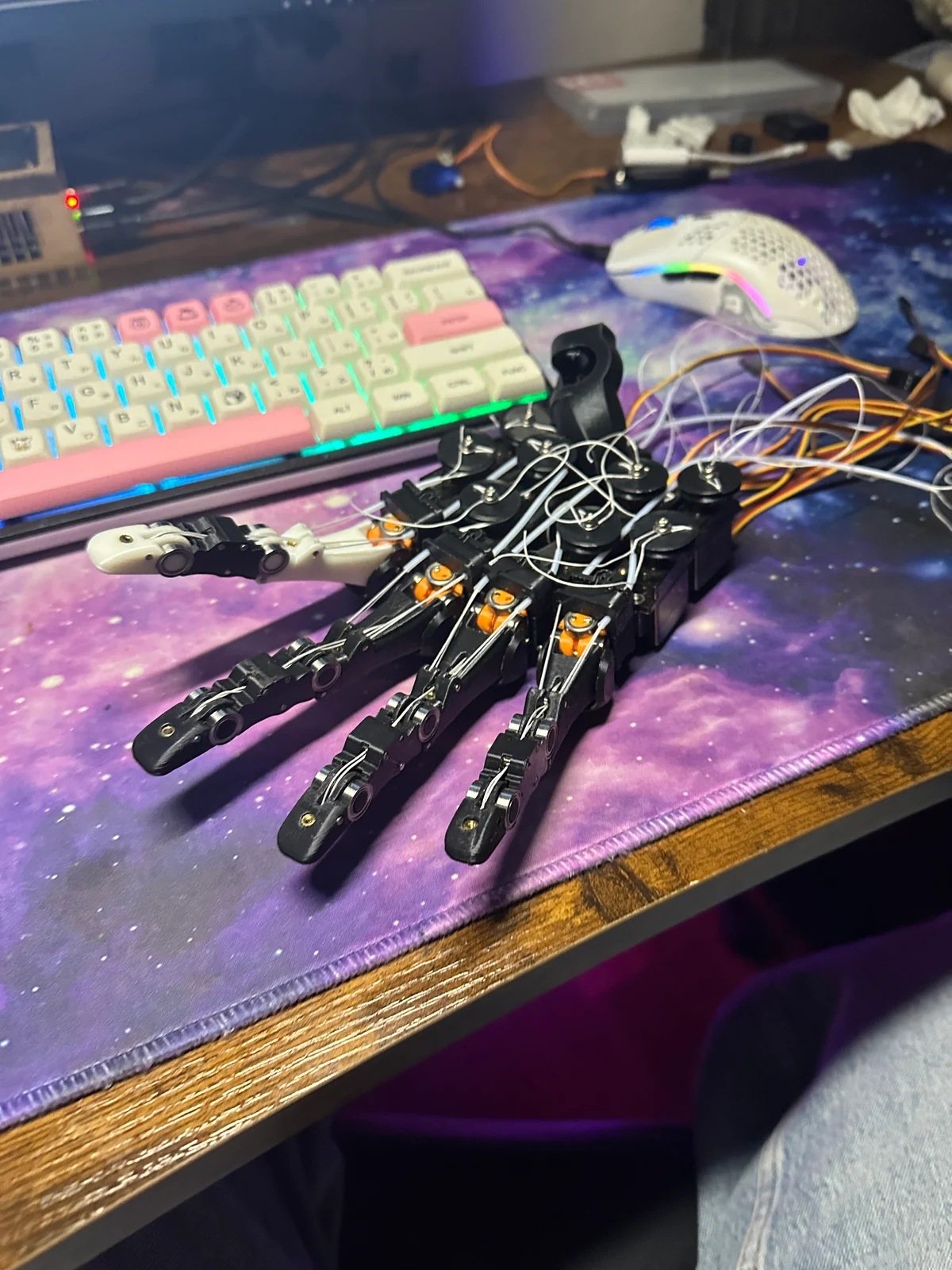
My tendon-driven robotic hand prototype.
From working prototypes to the hand I'm building now.
I'm developing a 25-DOF tendon-driven hand. For the next version, I plan to use SLS-printed Nylon 12 structures, custom brushless DC (BLDC) motors, and a custom PCB with current and position sensing. All actuators would be housed in the forearm.
The actuation targets full backdrivability and high torque transparency. With current and position feedback, I want the hand to estimate its joint state and infer contact from changes in load, working toward proprioception that lets the fingers “feel” contact.
Prototype demonstration
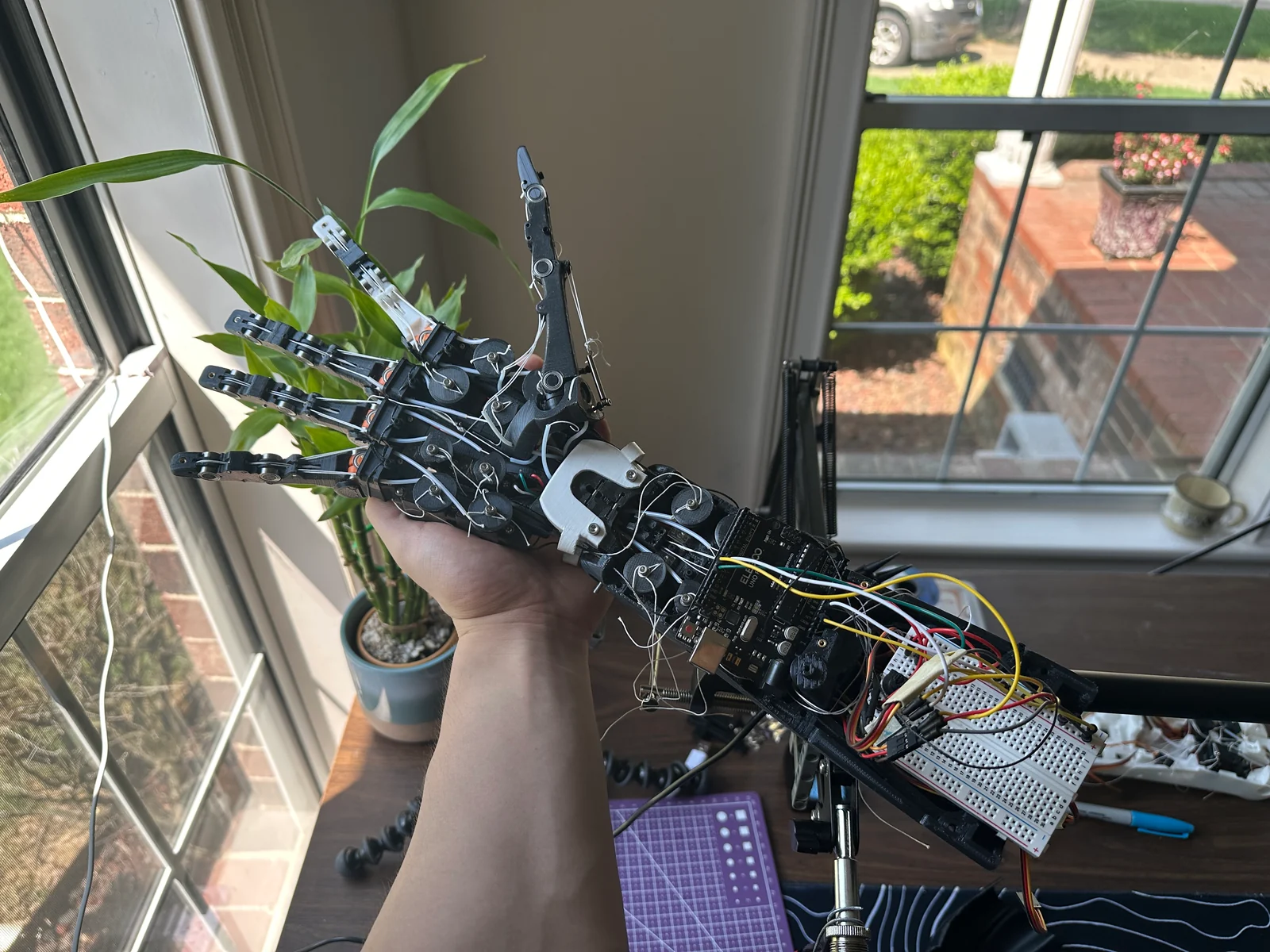
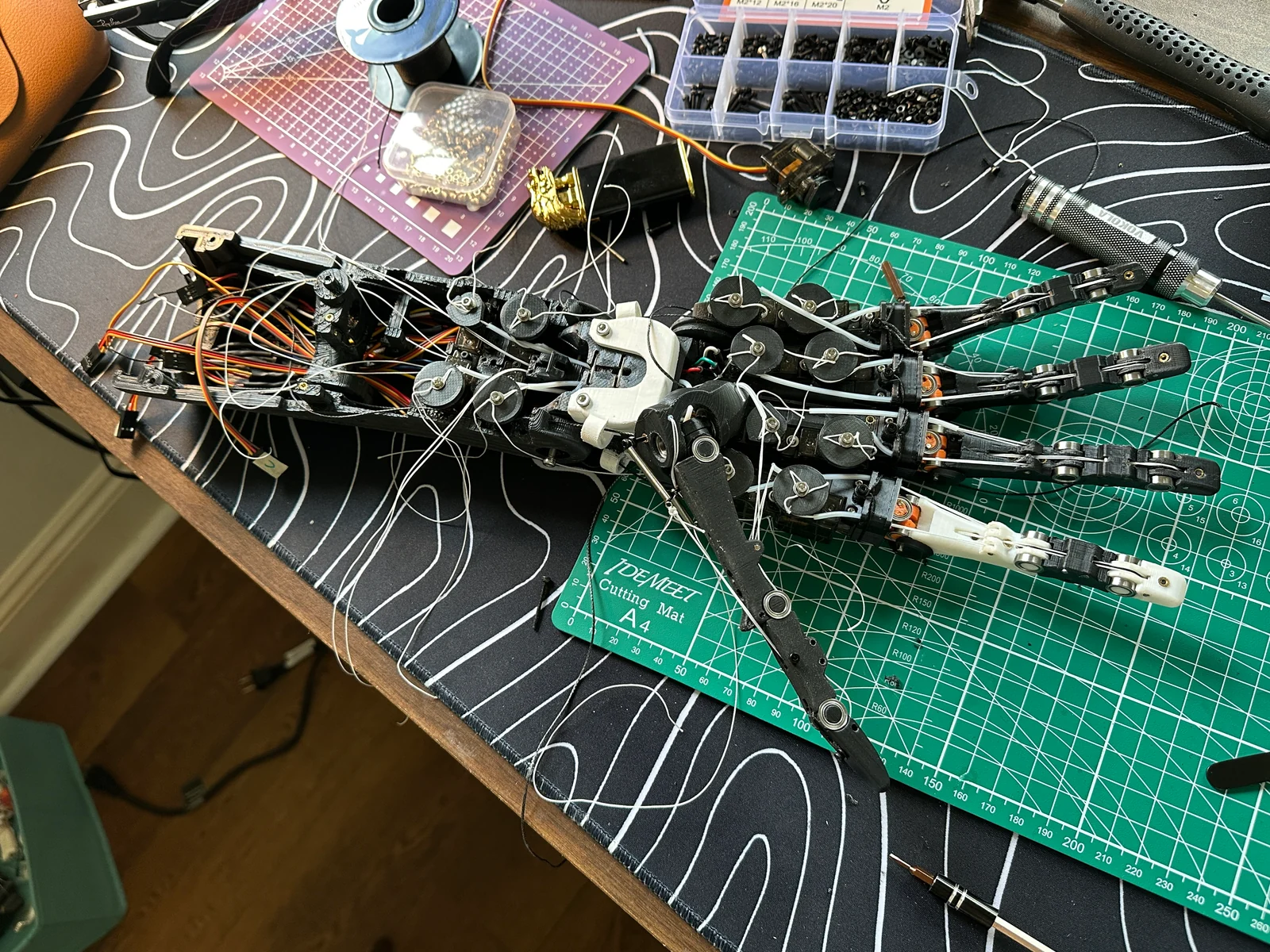
Hand and forearm assembly suspended during a strength demonstration.
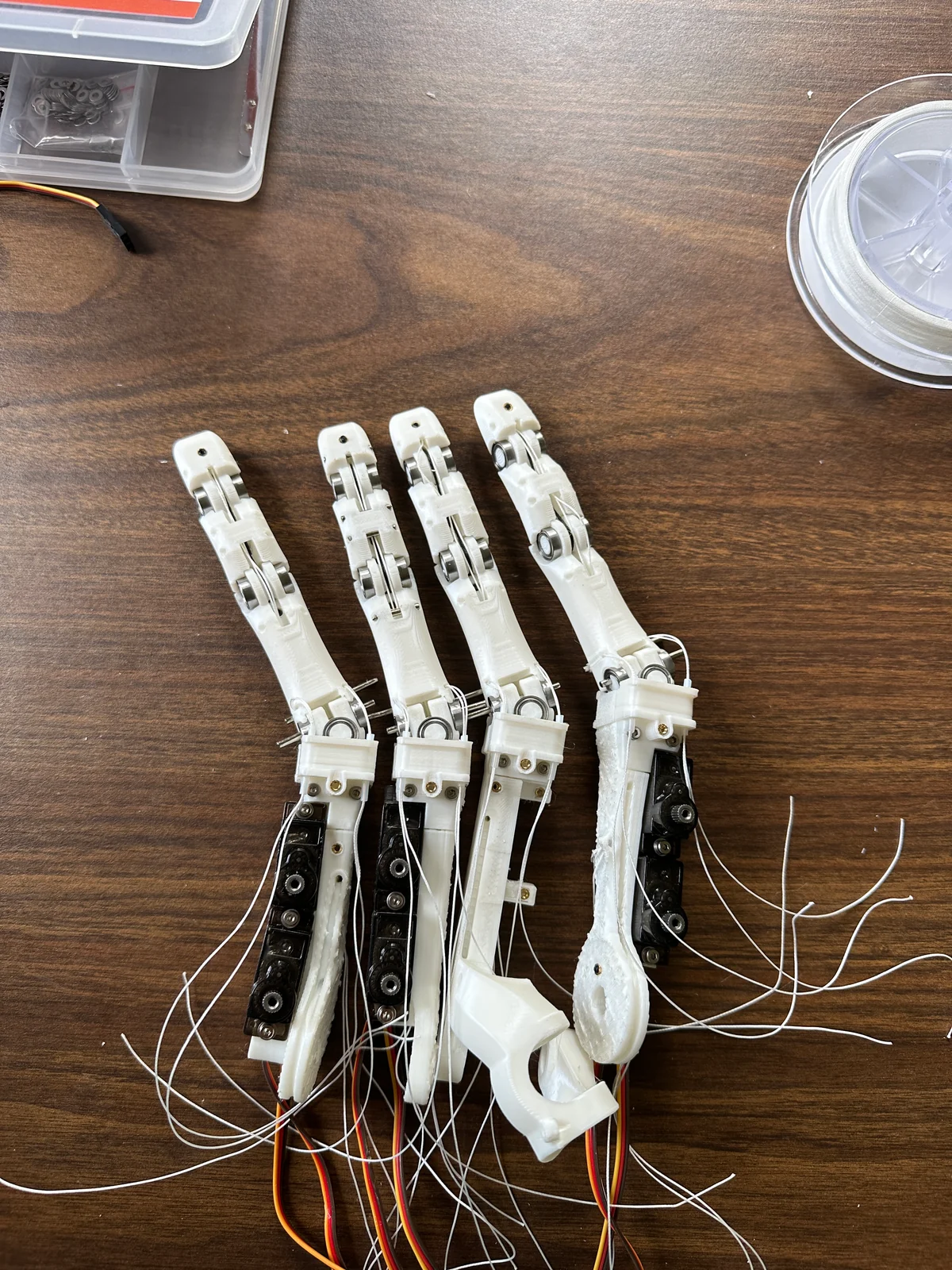
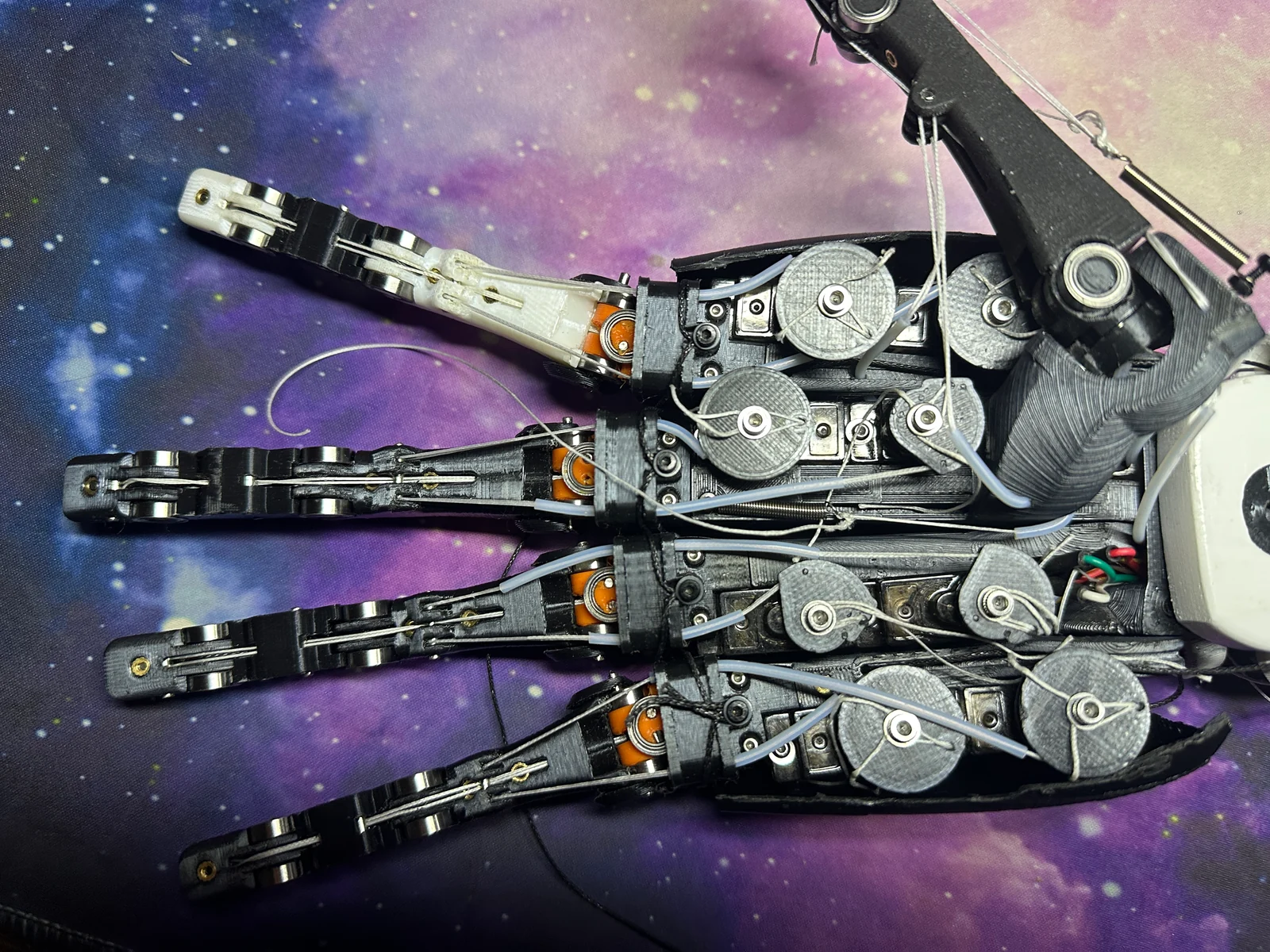
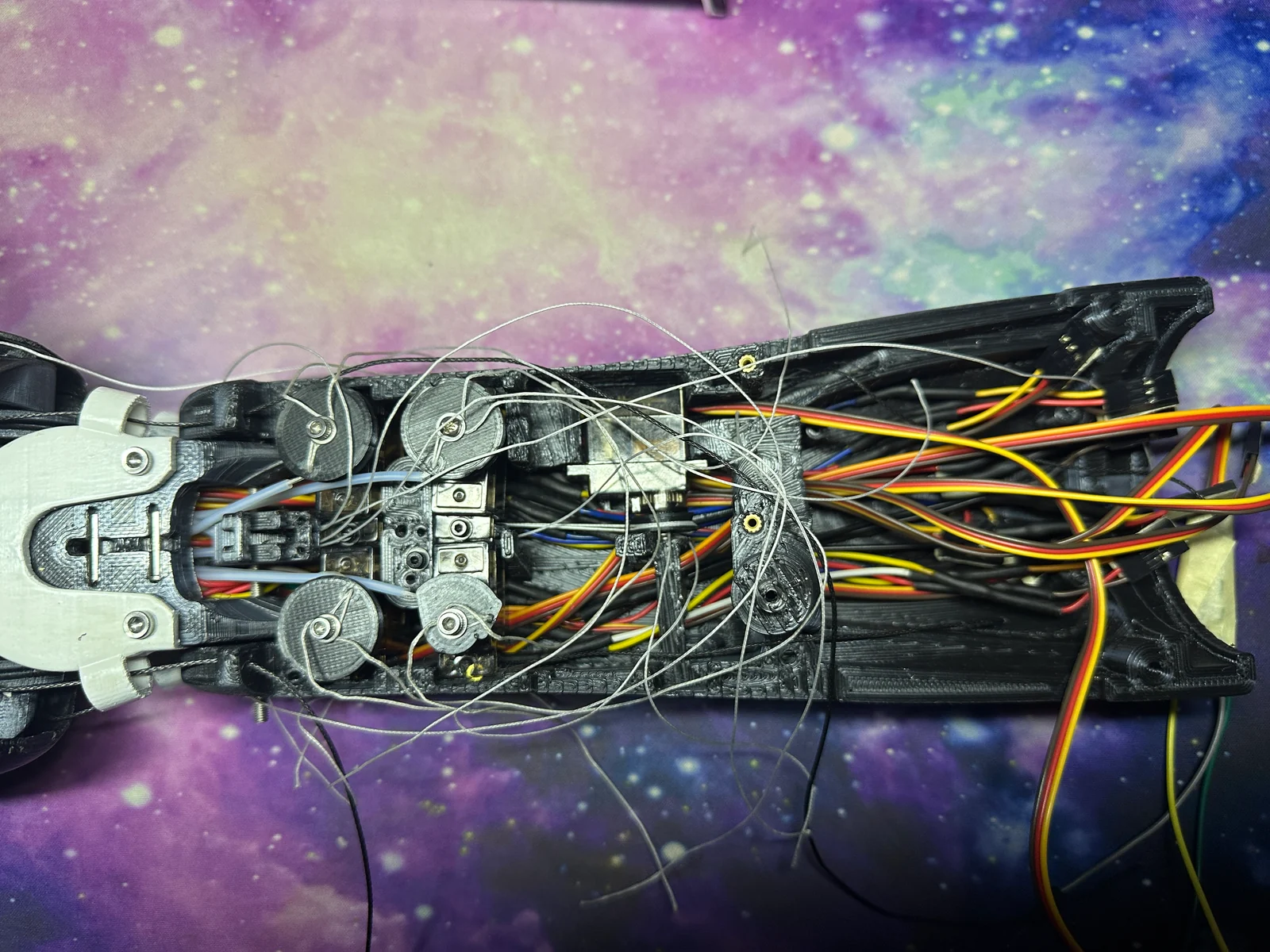
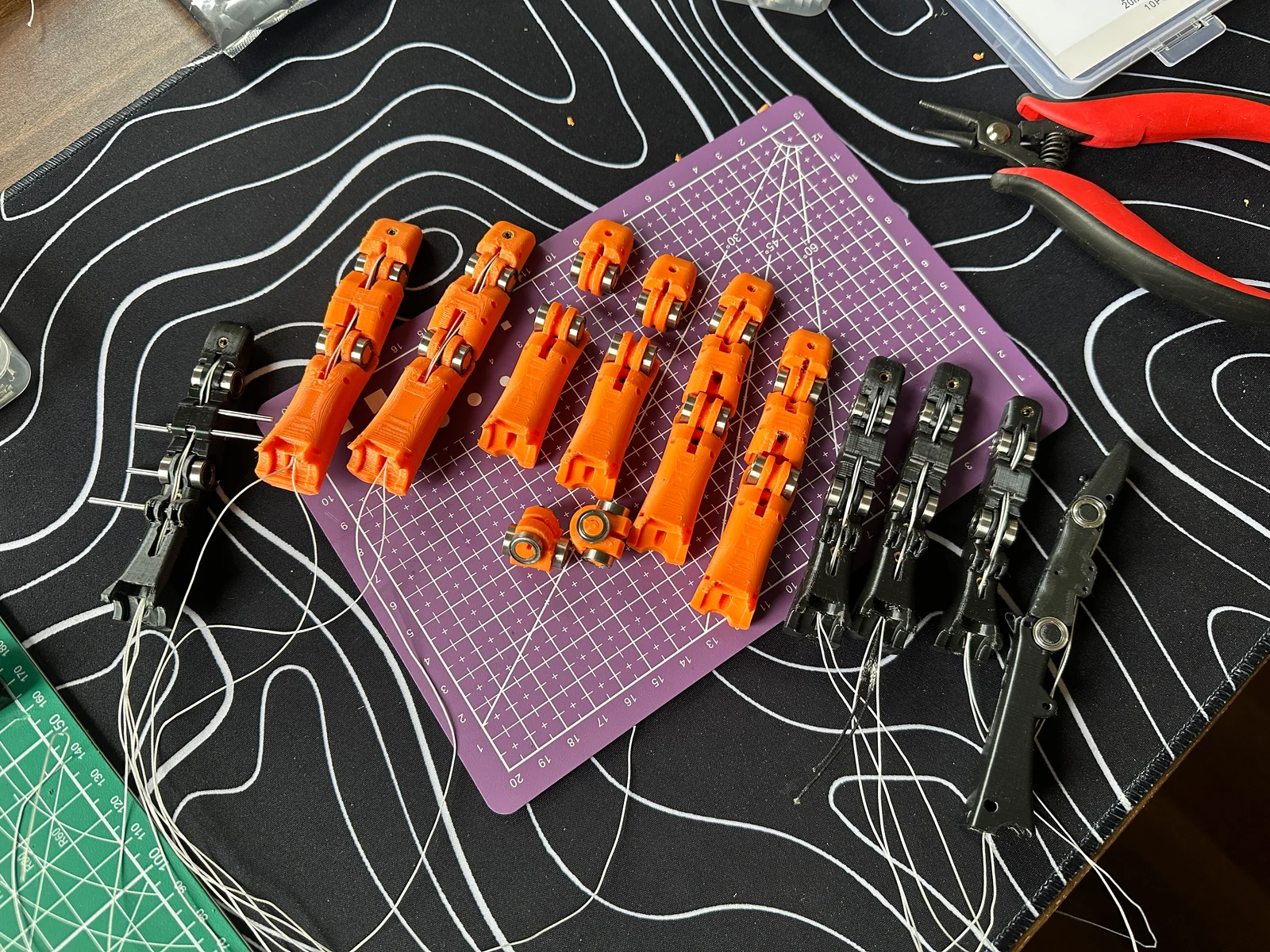
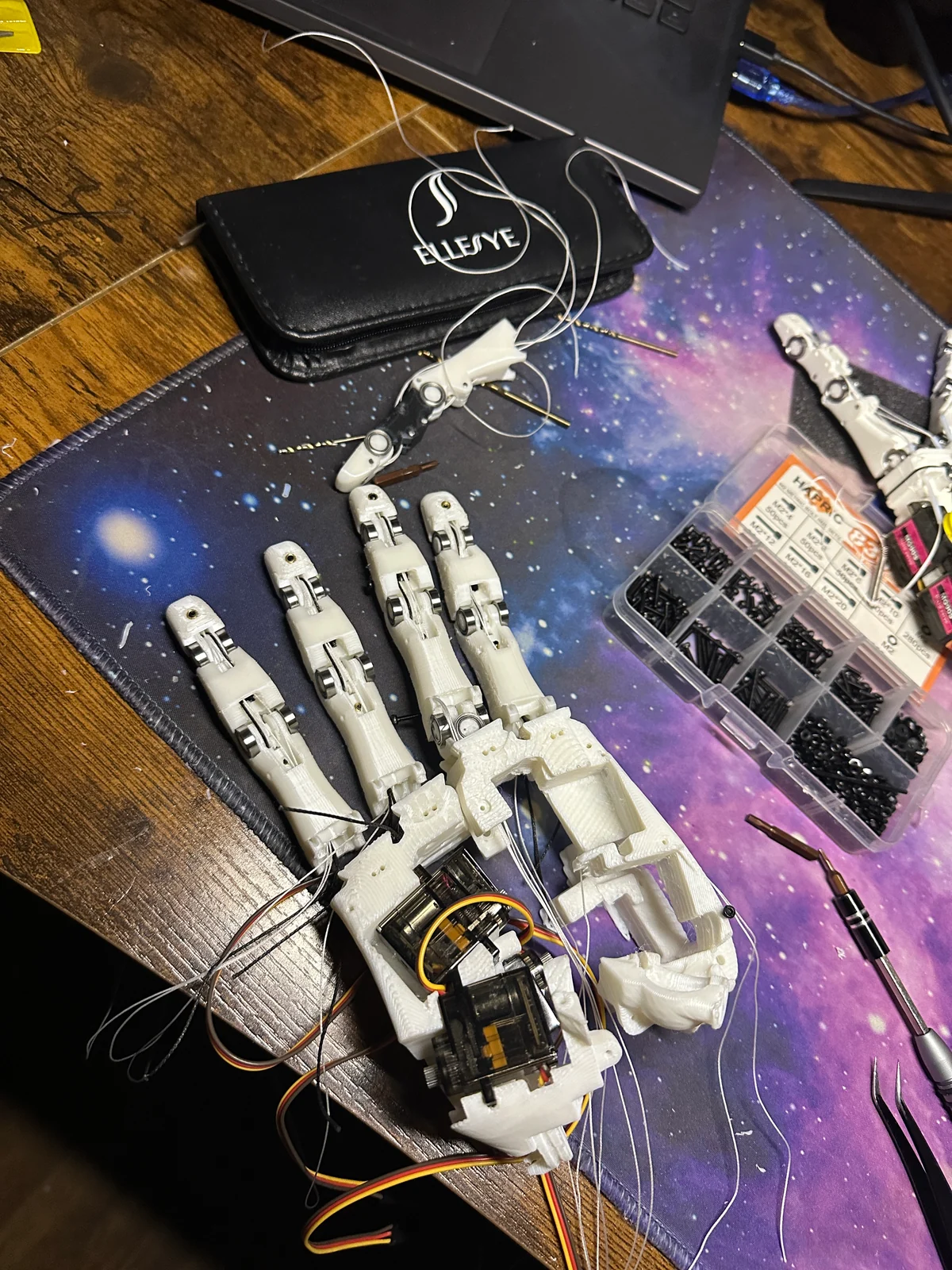
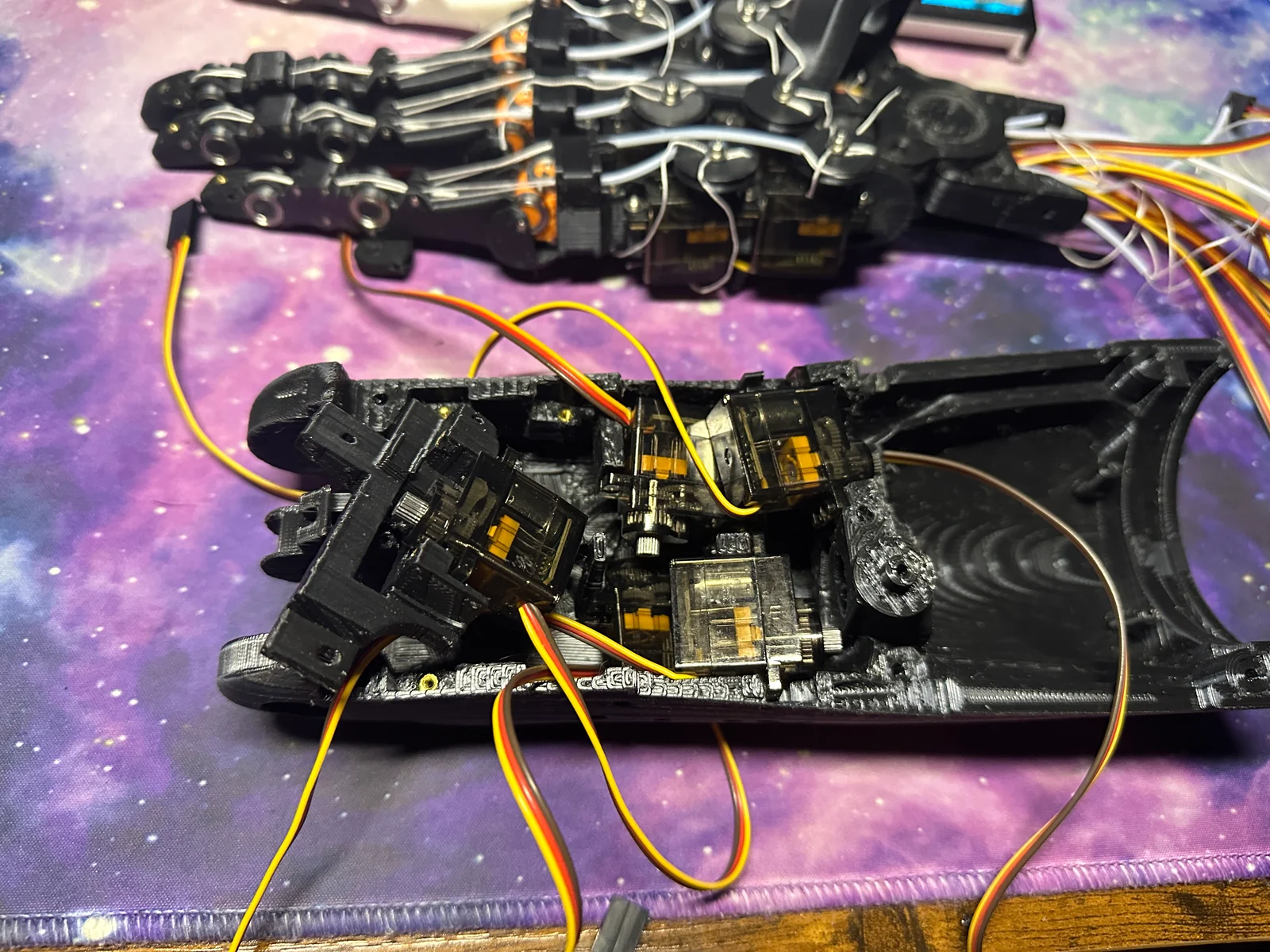
Different hand builds, tendon routing, and assembly work. Select a photo to view it full size.
CAD motion study
The finger moving at its joints in CAD. Each active joint axis uses an antagonistic pair of two tendons for motion in both directions. The complete design uses 25 pairs, totaling 50 tendons.
CAD section view
A cutaway view of the finger model, showing the internal geometry around its joints.
Built and tested
I built and tested functional hand prototypes.
For hand control, I used OpenCV and a webcam to estimate joint angles and convert them into PWM commands for the servos.
Current development
My proposed architecture has 25 independently actuated axes: four per non-thumb finger, five in the thumb, one for palm cupping, two at the wrist, and a separate proximal forearm-rotation axis.
Paired tendons actively pull each joint in both directions. I plan to house all actuators in the forearm, keeping their mass off the fingers and providing space for cooling, electronics, and service.
The working servo prototypes and the proposed 25-axis system are separate stages of development. The paper presents the design and sizing basis; qualification testing is still to come.
Analysis
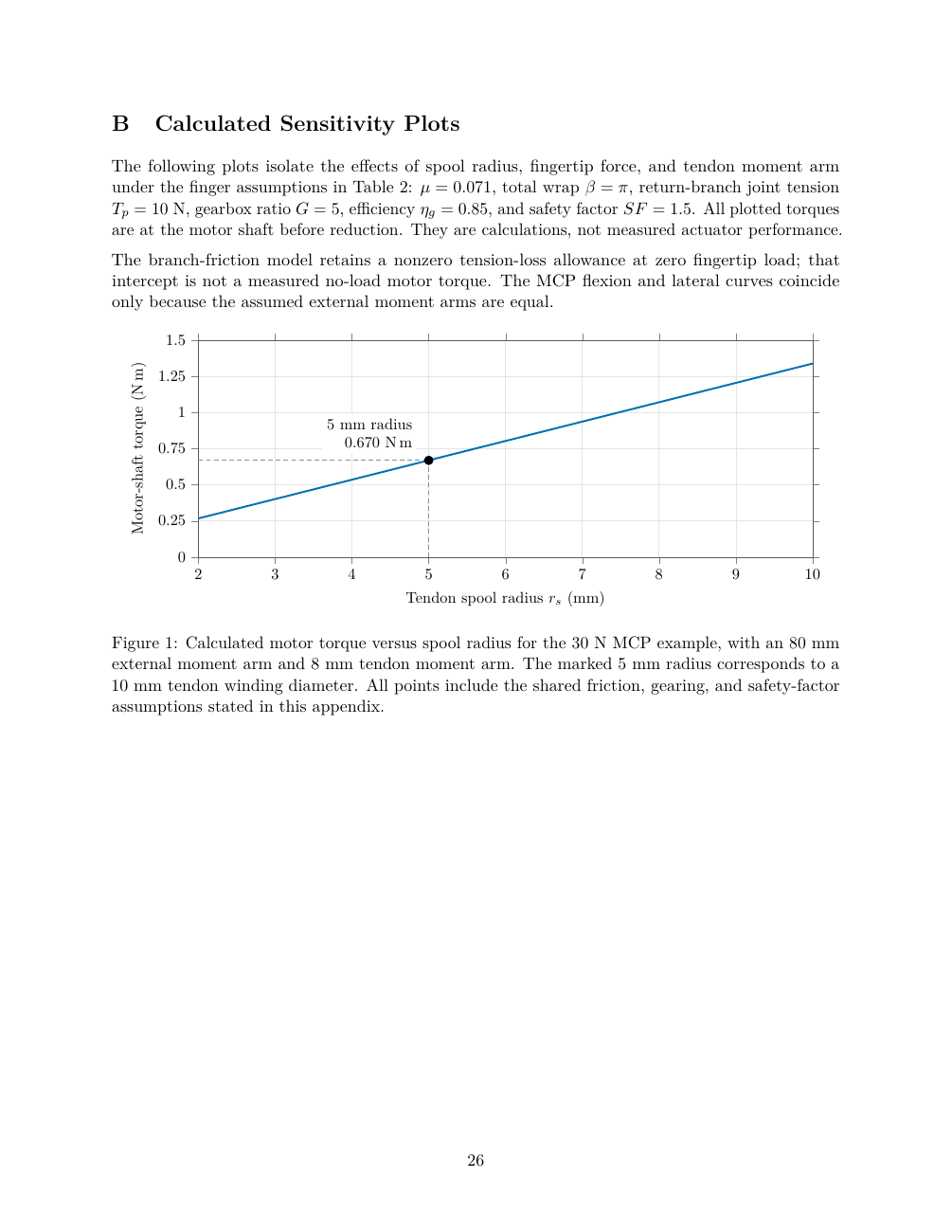
My paper follows the force path from the fingertip to the motor. It accounts for finger-joint geometry, the perpendicular distance from the tendon to the joint axis, spool radius, gear reduction, pretension, routing losses, and efficiency.
I built Actuation Lab to make force analysis and preliminary motor sizing interactive. The paper documents the equations, assumptions, worked examples, and input/output reference behind these tools, including gearing, winding choices, current, and copper heating.
Design and Development of a Dexterous Tendon-Driven Robotic Hand
Hao Chen · 37-page design & calculation paper
From leg geometry to a full robot in motion.
I designed and built a large walking hexapod, implemented inverse kinematics for its 3-DOF legs, and integrated onboard Wi-Fi, a display, and internal cooling.
Outdoor demonstration
My hexapod walking on grass across uneven terrain.
Servo calibration, 3-DOF leg IK, coding, and testing.
I'm at the University of Wisconsin–Madison. I like working across the full process: understanding the mechanics, making the hardware, and figuring out how to manufacture it.
Team leadership
Mechanical lead for the hand subsystem, with a focus on robotic hand design and development.
Product development
I work directly with the CEO on product development and materials testing in UW–Madison's mechanics of materials lab. My work also includes communications and supply-and-demand coordination.
Manufacturing
To support my engineering work, I started a business selling lifting belts and knee sleeves. I develop product improvements and work with overseas manufacturers, from communication through production coordination.
My product-development work includes a patent-pending design.
Contact